
Water inside a building does not wait. Call (512) 316-0963 to get connected with local water damage restoration help in Austin. The point of the call is to sort out what happened, explain in plain language what usually comes next, and give you an honest sense of timing before anyone is sent to your address.
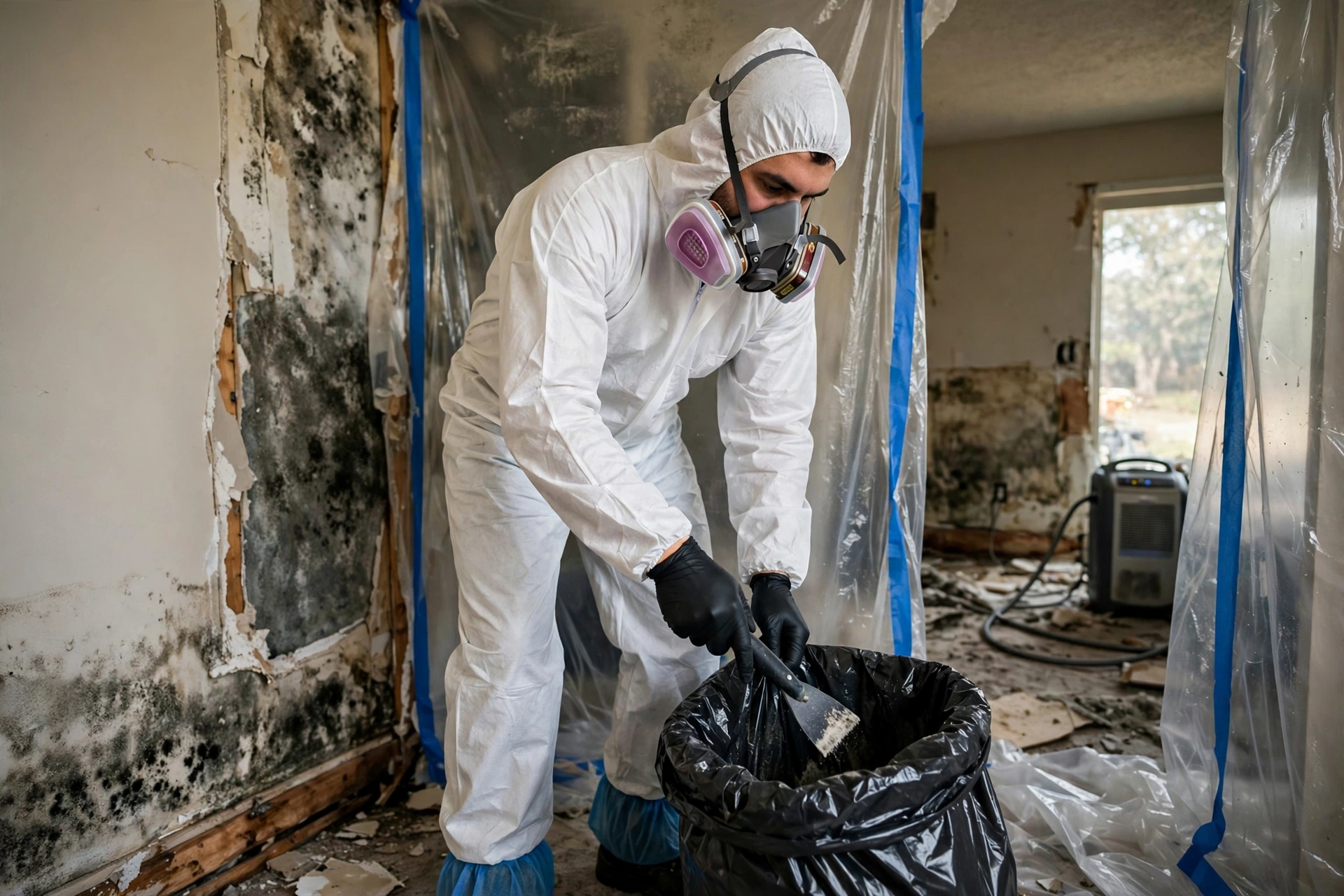
Four Jobs Inside One Phone Call
When someone says “water damage restoration,” they are really describing four separate jobs that happen in a fixed order. Knowing the order helps you judge whether any plan you are offered makes sense.
- Extraction. Standing water is pumped and vacuumed out. This is the most urgent step because every hour of contact lets water travel further into materials.
- Drying. Fans and dehumidifiers pull moisture out of walls, floors, and framing. Drying is finished when moisture readings match what is normal for that building, not when things feel dry.
- Cleaning. Surfaces and belongings are cleaned, and the level of cleaning depends on how clean or contaminated the water was.
- Rebuilding. Drywall, insulation, flooring, and finishes that could not be saved are replaced.
The choices made in the first two jobs decide how large the fourth one turns out to be. Fast extraction and careful drying are how a small loss stays small.
Water Damage Services in Austin
Most calls fall into one of six situations. Each has its own page with the details.
🚨 Water Extraction & Cleanup
Standing water in a living space is the urgent version of the problem. Water extraction and cleanup in Austin covers how water is removed, what equipment does what, and what you can safely do while you wait.
💨 Water Damage Mitigation & Drying
Water you can see is only part of the loss. Water damage mitigation and structural drying explains how hidden moisture is found and dried before it causes mold or rot.
🌊 Flood Damage Restoration
Central Texas is known for fast, violent flooding. Flood damage restoration and cleanup covers contaminated water, safety, and the insurance gap many owners discover too late.
🧊 Burst Pipe & Freeze Damage
Austin learned in February 2021 what a hard freeze does to buildings that were never built for it. Burst pipe and freeze damage also covers slab leaks, which are common in this part of Texas.
🦠 Mold After Water Damage
Mold can follow water quickly, and Texas regulates mold work more strictly than most states. Mold after water damage explains the state’s 25-square-foot rule and how to check a license.
🛠️ Water Damage Repair & Reconstruction
After the structure is dry, damaged materials are replaced. Water damage repair and reconstruction covers drywall, flooring, cabinetry, and finishing work.
The First Hour: What Helps and What Hurts
What helps:
- Stop the source if you can do it safely. For a pipe or appliance line, close the nearest shut-off valve. For the whole house, use the main valve. Austin Water’s guidance for a burst pipe is to shut the water off at the property owner cut-off valve near your water meter.
- Keep people and pets out of any room with standing water, a sagging ceiling, or signs of sewage.
- Stay clear of electrical hazards. If water is near outlets, appliances, or light fixtures, do not touch them. Shut off power at the panel only if you can reach it without standing in water.
- Photograph and record video of the water, the source, and the damage before you move anything.
- Lift small valuables, papers, and electronics to a dry surface, and put foil or plastic blocks under furniture legs.
What hurts:
- Waiting to see whether it “dries on its own.” Wet drywall and padding stay wet.
- Running a household vacuum on standing water.
- Standing or walking under a ceiling that is bulging or dripping.
- Painting over a stain before the source is found and the wall is confirmed dry.
- Throwing damaged items out before you have photographed them for a claim.
Why Central Texas Water Damage Is Its Own Problem
Flash floods. Central Texas has a long history of sudden, severe flooding. FEMA’s account of the 2013 Halloween flood describes floods that hit Austin in the early hours of Halloween morning, killing five people and damaging more than 500 homes, with some parts of the city receiving nearly 10 inches of rain in 24 hours and Onion Creek and adjacent neighborhoods overwhelmed by the water. Another significant flood followed two years later, and Austin has spent years buying out properties in the most flood-prone areas.
Hard freezes. Most of the year Austin is trying to shed heat, not hold it, so many homes have exposed plumbing and little freeze protection. During Winter Storm Uri in February 2021, Austin Water’s director described tens of thousands of buildings with burst pipes, burst fire lines, and burst water heaters, and the utility issued a boil water notice that lasted from February 17 to 23.
Slab foundations. A large share of Austin homes sit on concrete slabs rather than over basements. Water from a leak or a flood spreads sideways across a slab floor instead of draining downward, and plumbing that runs inside or beneath the slab can leak out of sight.
Heat and air conditioning. Long, hot summers mean air conditioners run constantly, and every one of them produces condensation that has to drain somewhere. A clogged condensate line or a failing drain pan can quietly soak a ceiling or an attic for days.
Storms and hail. Severe thunderstorms and hail can damage roofs and open a path for rain into attics and ceilings, which is a common way for water to enter Austin homes that has nothing to do with plumbing.
Where the Water Comes From
| Source | Typical Austin Cause | Common Clue |
|---|---|---|
| Supply line or pipe | Hard freeze, aging pipe, slab movement | Sudden drop in pressure, sound of running water |
| Water heater | Tank failure in a closet or attic | Water pooling near the heater or stains below it |
| Air conditioner | Clogged condensate line or full drain pan | Ceiling stain near the air handler, musty smell |
| Appliance | Failed washer, dishwasher, or ice maker line | Damp cabinet base, warped floor near appliance |
| Roof | Hail damage, worn flashing, storm-driven rain | Stain that appears or grows after rain |
| Outside water | Flash flood, drainage overwhelmed, groundwater | Water entering at doors, garage, or slab edge |
| Sewer or drain | Blockage or overloaded municipal line | Backup at a floor drain, tub, or toilet |
Clean Water, Gray Water, and Black Water
The restoration industry commonly sorts water into three categories. Clean water comes from a supply line or a roof leak and is the least hazardous at first, though it can worsen with time. Gray water, from a washing machine or dishwasher overflow, contains contaminants that can make people ill. Black water, which includes sewage and flood water from outside, is considered grossly contaminated. The category changes what can be dried and saved, what has to be removed, and what protective equipment crews need, which is why the first phone call always includes the question of where the water came from.
What Drying Actually Looks Like
| When | What Happens |
|---|---|
| Day 0 | Water is extracted, moisture is mapped, unsalvageable materials are removed, and drying equipment is set up |
| Day 1 | First moisture readings are taken and equipment is adjusted to where materials are still wet |
| Days 2 to 3 | Readings continue; surface moisture comes down first, while dense materials lag behind |
| Days 3 to 5 or longer | Drying is confirmed against normal readings for the building; thick or saturated materials can take longer |
These are typical patterns, not promises. The actual timeline depends on how much water there was, what it soaked into, and the humidity indoors.
Mold, and the Texas 25-Square-Foot Line
The U.S. Environmental Protection Agency advises that most mold growth can be prevented if wet materials are dried within 24 to 48 hours. That is a hard target after a serious loss, which is why speed matters.
Texas also regulates mold work. According to the Texas Department of Licensing and Regulation, assessment and remediation for pay must generally be done by state-licensed professionals when mold affects 25 contiguous square feet or more, while smaller areas do not require a license and homeowners may clean mold on their own home. If mold is part of your situation, read the mold page before you hire anyone.
Insurance Realities in Texas
Standard homeowners policies generally cover water damage that is sudden and accidental, such as a burst pipe or a failed water heater. They commonly exclude flood water rising from outside, which needs a separate flood policy, and flood policies typically have a waiting period before coverage starts, often 30 days for new National Flood Insurance Program policies. Sewer or drain backup usually needs an endorsement. Mold coverage is often limited. Every policy is different, so read yours or ask your agent early, keep a detailed record, and take reasonable steps to stop further damage, which insurers expect.
What Moves the Price
No honest company can name a price without knowing what happened. The main factors are the type of water, how long it has been there, how large the area is, what materials are wet, how difficult access is, and how much rebuilding follows. Scope and pricing are discussed before work begins, in writing where possible, so there are no surprises on the invoice.
Areas We Serve in Austin
Help is available across Austin, with particular focus on five areas that carry very different water risks:
- Onion Creek — a southeast Austin creek corridor with a documented history of serious flooding.
- Downtown Austin — high-rise condos, apartments, and mixed-use buildings where one leak reaches many units.
- Crestview — mid-century ranch homes and bungalows in north-central Austin.
- Barton Hills — hillside homes near Barton Creek in southwest Austin.
- Circle C Ranch — a large master-planned community of newer homes in southwest Austin.
If your neighborhood is not on this list, call anyway. Coverage is not limited to these five areas, and one phone call confirms your address.
How to Vet Any Restoration Company
- Ask who will measure moisture and how you will know the building is dry.
- Ask for the scope of work and pricing in writing before anything starts.
- If mold is involved and the area is 25 square feet or more, ask for the company’s Texas license and check it with the Texas Department of Licensing and Regulation.
- Ask how they will document the work for your insurer.
- Ask what happens if hidden moisture or mold turns up later.
Why Austin Residents Call DryPoint
Austin water damage looks different depending on the address. A slab leak in a Crestview ranch house, a burst fire line in a downtown tower, a flooded lower level near Onion Creek, and an air conditioner overflow in a Circle C attic are four different problems that share one urgency. The goal of every call is to work out which one you have, explain what usually comes next, and get help moving quickly.